Context
A logistics business growing faster than its experience.
Shopify had acquired the infrastructure to fulfill merchant orders — warehouses, carriers, tracking, but the merchant-facing experience still felt like a collection of back-end systems bolted together. Merchants onboarding from Shopify's core platform into Shopify Logistics encountered a dramatically different, often confusing product.
I led the design team across five product pillars: delivery experience, time to ship, integrations, inventory visibility and control, and billing, claims, and refunds.
The mandate was clear: make logistics feel like Shopify — fast, clear, merchant-first. Not like something they acquired.
The Work
Five pillars. One merchant thread.
Rather than treating each pillar as a standalone workstream, we established a shared design direction: the merchant's relationship with logistics should feel as intuitive as managing their store. Every surface, every state, every empty state should answer the merchant's real question, not just reflect the underlying data model.
End-to-end redesign of how merchants track, manage, and communicate delivery status to their customers.
Surfacing and improving operational bottlenecks through XFN partnerships with logistics operations teams.
Resolving overlaps between Shopify's delivery experience and Shopify Logistics, building coherent onboarding from one into the other.
Bringing full inventory transparency to 100% of logistics users — from partial coverage to complete real-time visibility.
Designing resolution flows for post-purchase issues — lost shipments, incorrect charges, and refund states — where merchant trust is most at stake.
Spotlight: Fast Tags & Shop Pay
Making delivery speed a purchase driver.
Merchants enrolled in Shopify Logistics could offer faster delivery guarantees, but this signal wasn't reaching shoppers at the moment it mattered most. Fast Tags expansion put delivery speed prominently in the purchase path, and pairing it with the Shop Pay button created a frictionless path from intent to checkout.
The result: a 34% increase in conversion for merchants using both features. The design work wasn't about new UI patterns — it was about surfacing the right signal at the right moment.
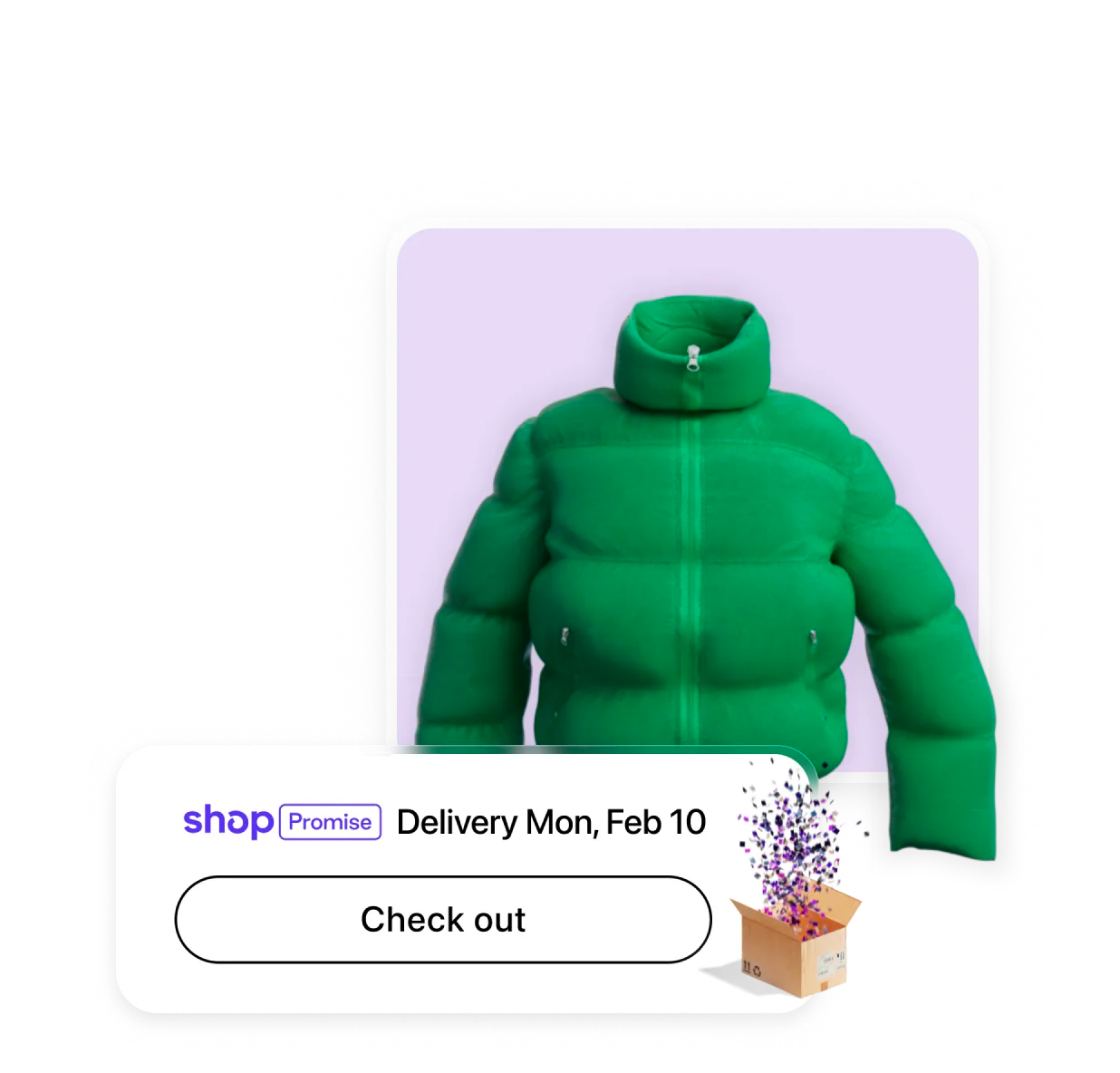
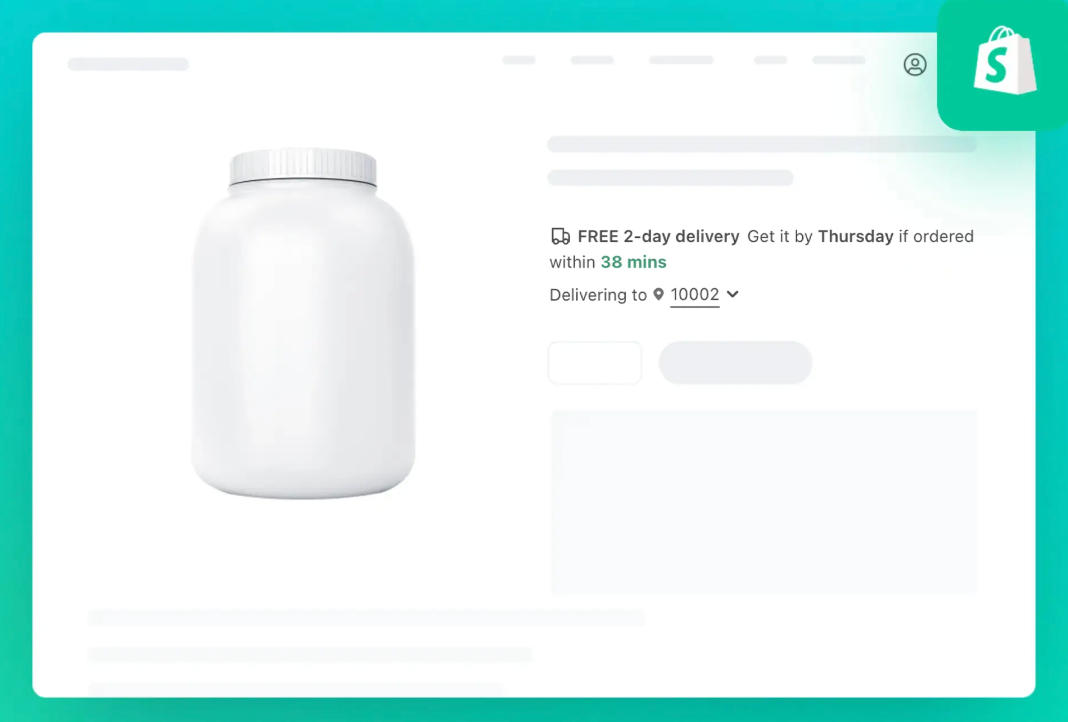
The delivery promise at the point of purchase — surfaced at the moment that drives conversion
Spotlight: Inventory Visibility
Not a black box. Not overwhelming.
Research surfaced a nuanced insight: merchants wanted to know where their inventory was at all times — even when they weren't going to act on it. Visibility itself was the feature. It was about trust and confidence, not workflow.
The design challenge was threading that needle: complete real-time visibility without cognitive overload. We moved from partial coverage to 100% of logistics users having full inventory transparency — showing counts, locations, and movement states in a way that felt manageable, not alarming.
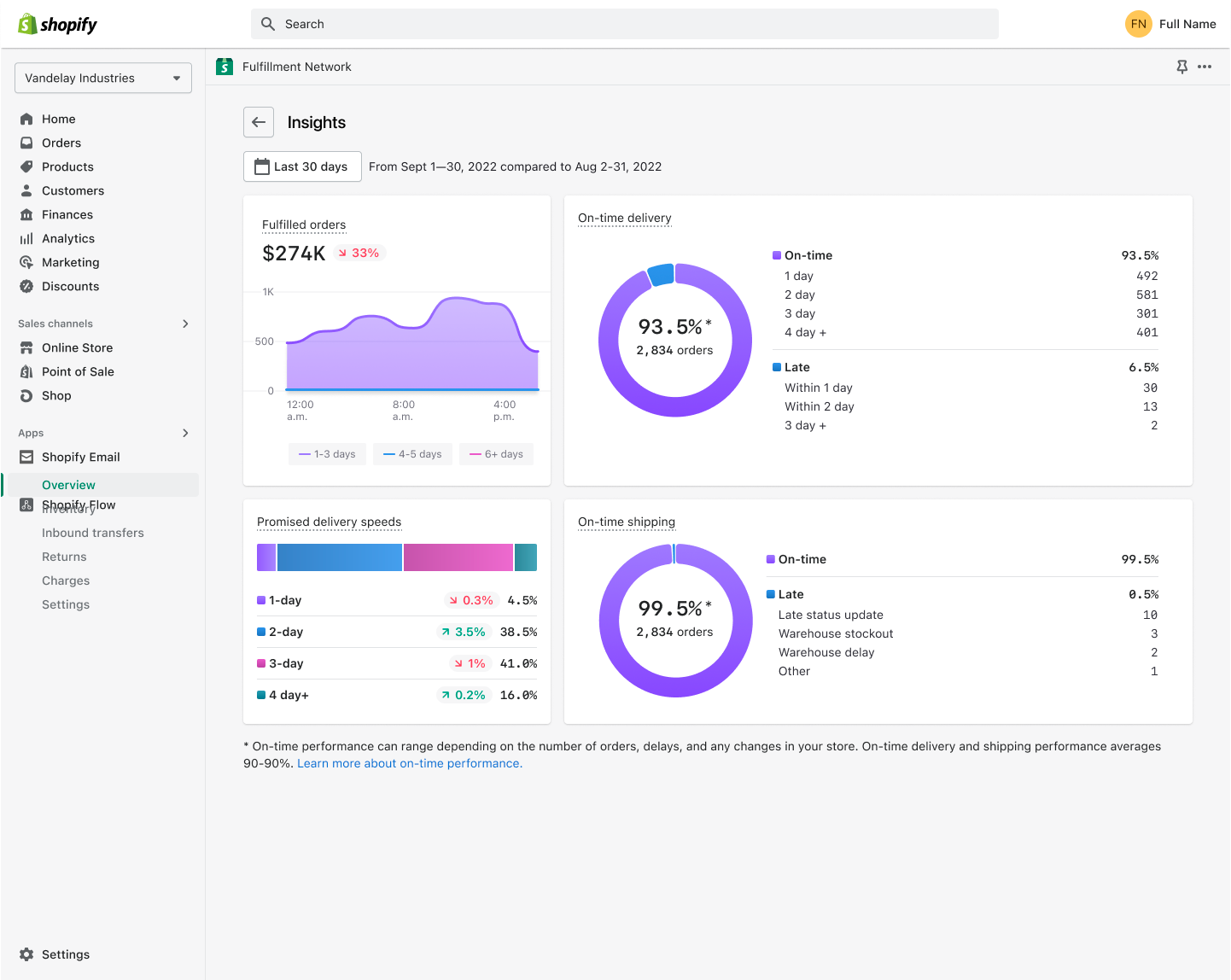
SFN Insights: fulfillment order volume, on-time delivery rate (93.5%), and speed-tier breakdown — visibility that builds merchant confidence
Leadership
Running design across the org.
Leading 6 designers across 5 pillars in a company scaling fast meant different things day to day: setting direction, clearing ambiguity, brokering decisions between logistics product, platform, and operations. As a Staff Designer working alongside the manager role, I was also active in the work — not just orchestrating it.
Set shared design principles across 5 pillars with 6 direct reports, creating coherence across a fragmented product surface.
Brokered design alignment between Shopify's delivery experience and the Shopify Logistics acquisition, resolving significant product overlap.
Contributed as a senior individual contributor — leading by example on the highest-complexity surfaces, not just managing the work.
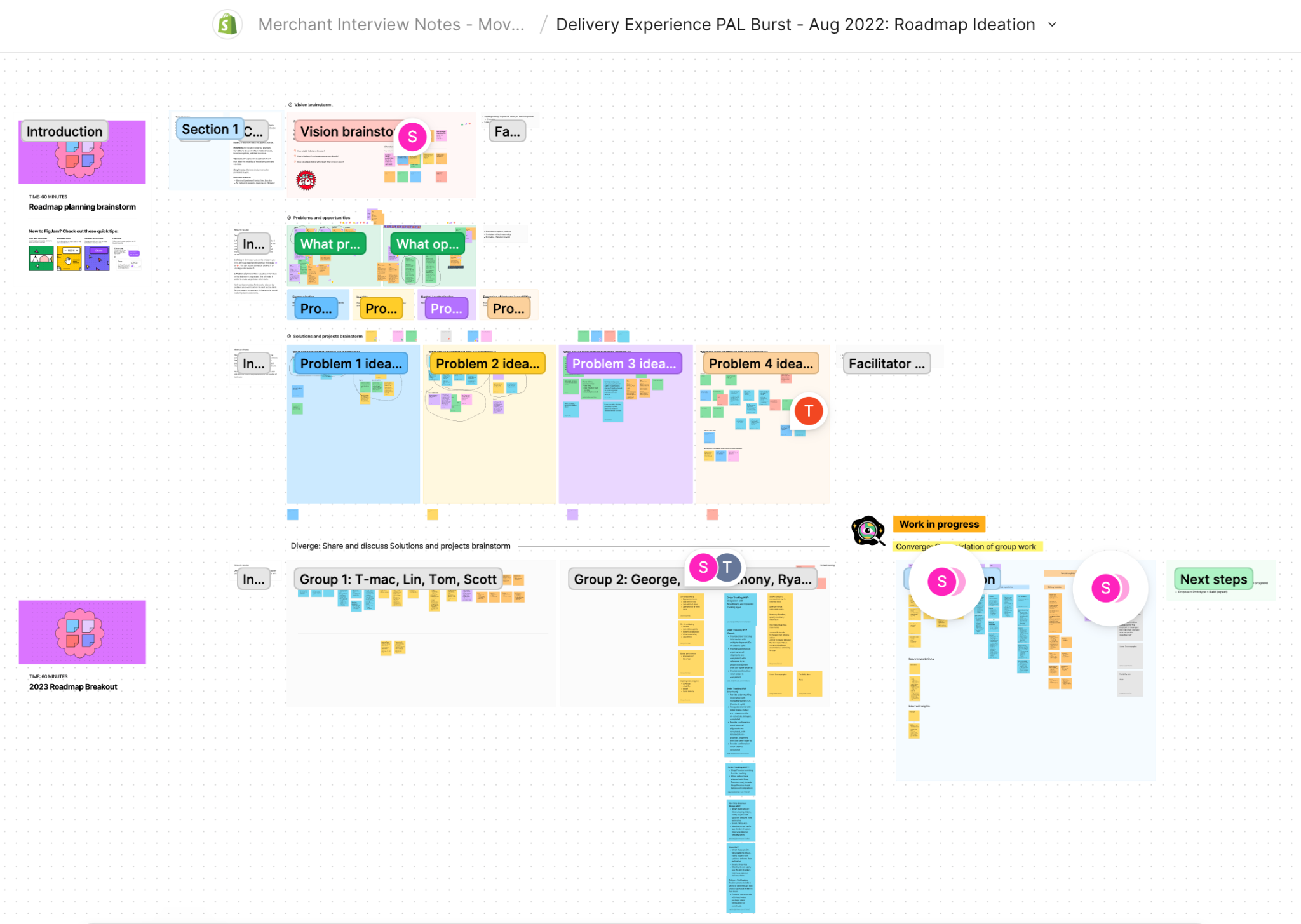
PAL Burst roadmapping session — delivery experience ideation across groups
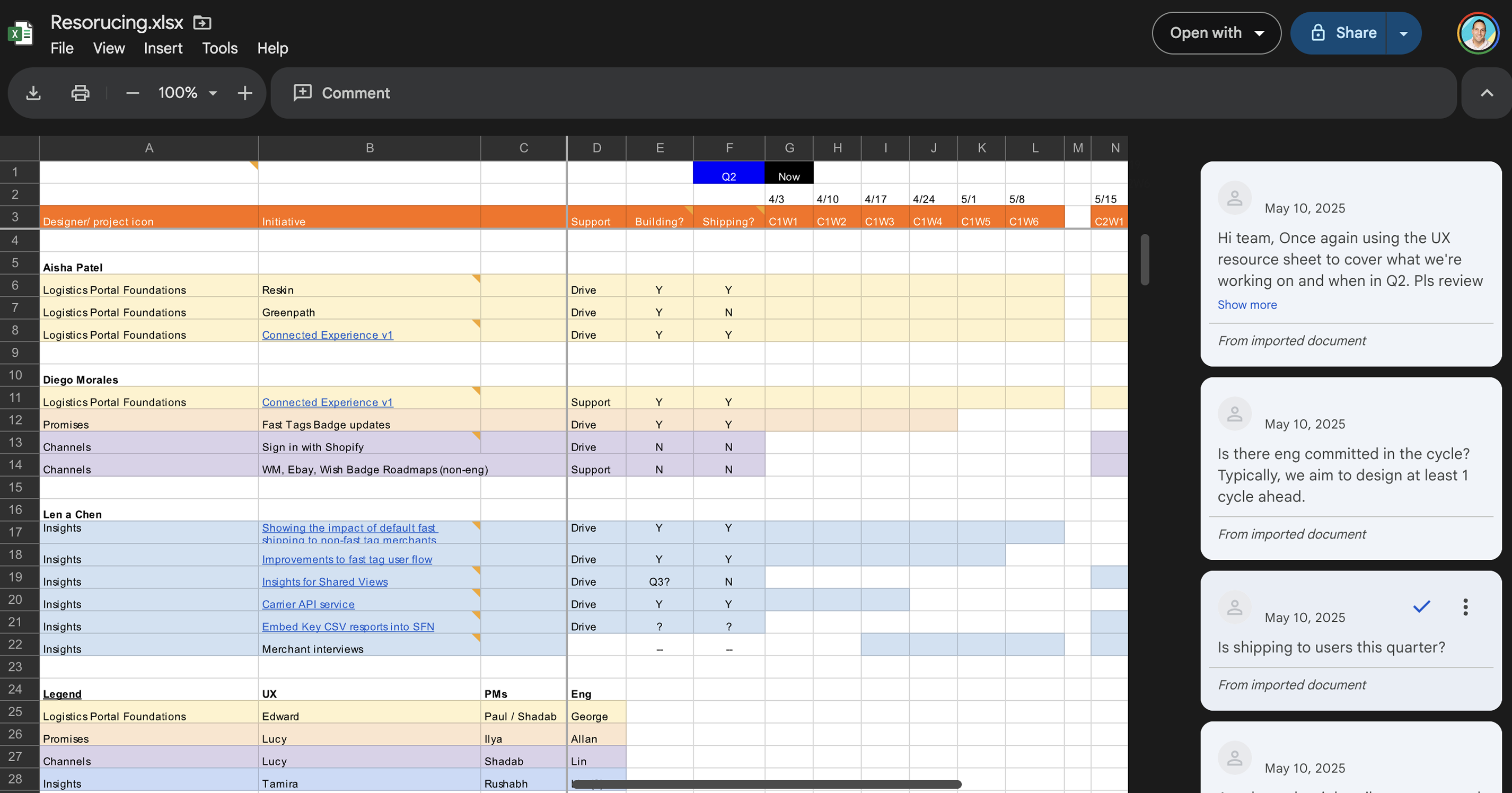
Resourcing tracker — designer allocation across 5 pillars and cycles
Outcomes
What the work moved.
Fast Tags expansion combined with Shop Pay button integration drove a significant conversion lift for merchants enrolled in Shopify Logistics.
Scaled from partial coverage to full real-time inventory transparency across all logistics users — grounded in the research insight that visibility itself builds merchant trust, even when no action is needed.
Operational design improvements through XFN partnerships with logistics teams reduced time-to-ship, contributing to measurably faster delivery for merchants on the platform.
Led the design work that reconciled the delivery experience between core Shopify and Shopify Logistics, and built the onboarding path that unified them for merchants.
Shopify Logistics was subsequently acquired by Flexport in a multi-billion dollar deal, in part to accelerate domestic delivery capabilities. The merchant experience foundation built during this period contributed to that outcome.
Process & Artifacts
Selected work.
Flows, explorations, and shipped screens from the delivery experience, onboarding, and inventory visibility workstreams.
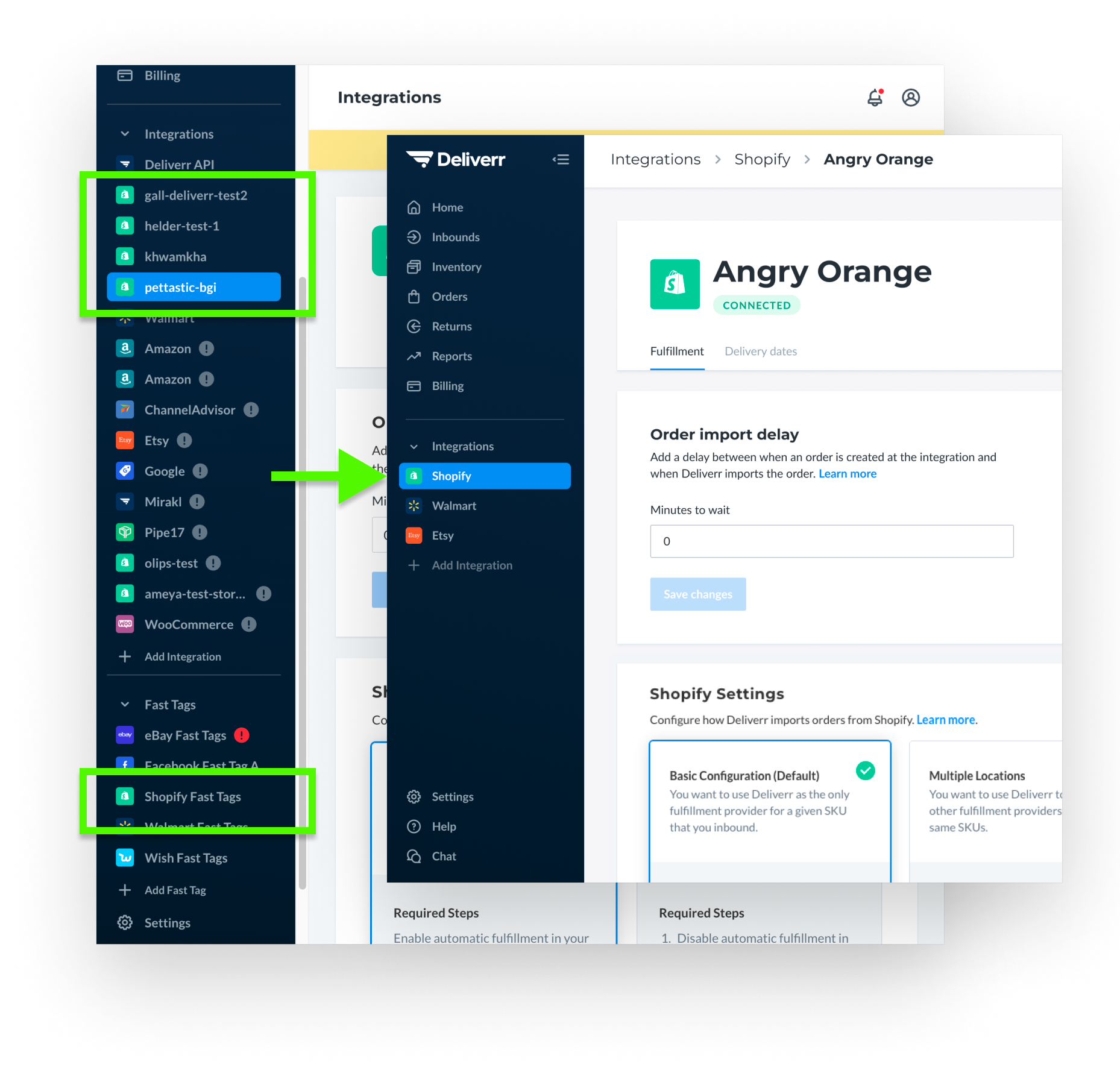
Integrations navigation rework — resolving the Deliverr-to-Shopify Logistics handoff for merchants onboarding across both platforms
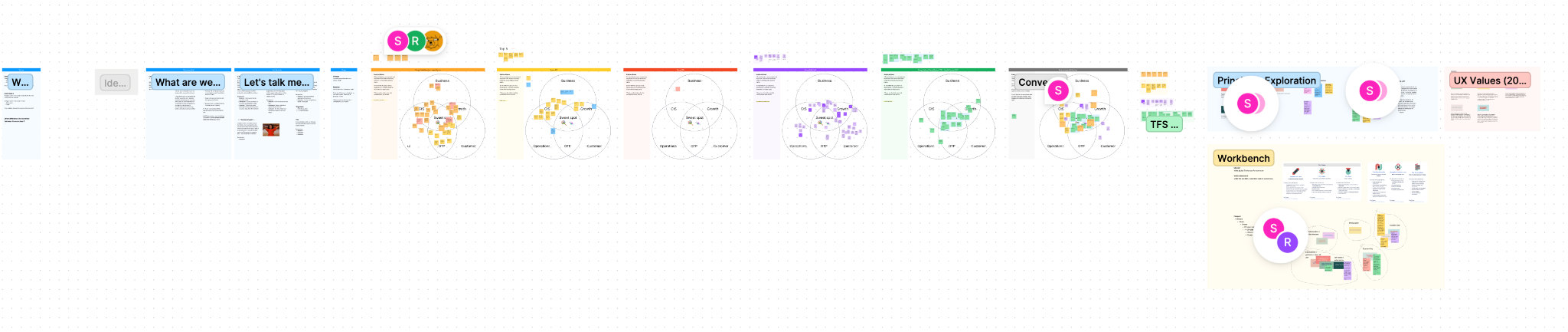
UX to Business Value workshop — connecting design decisions to merchant outcomes
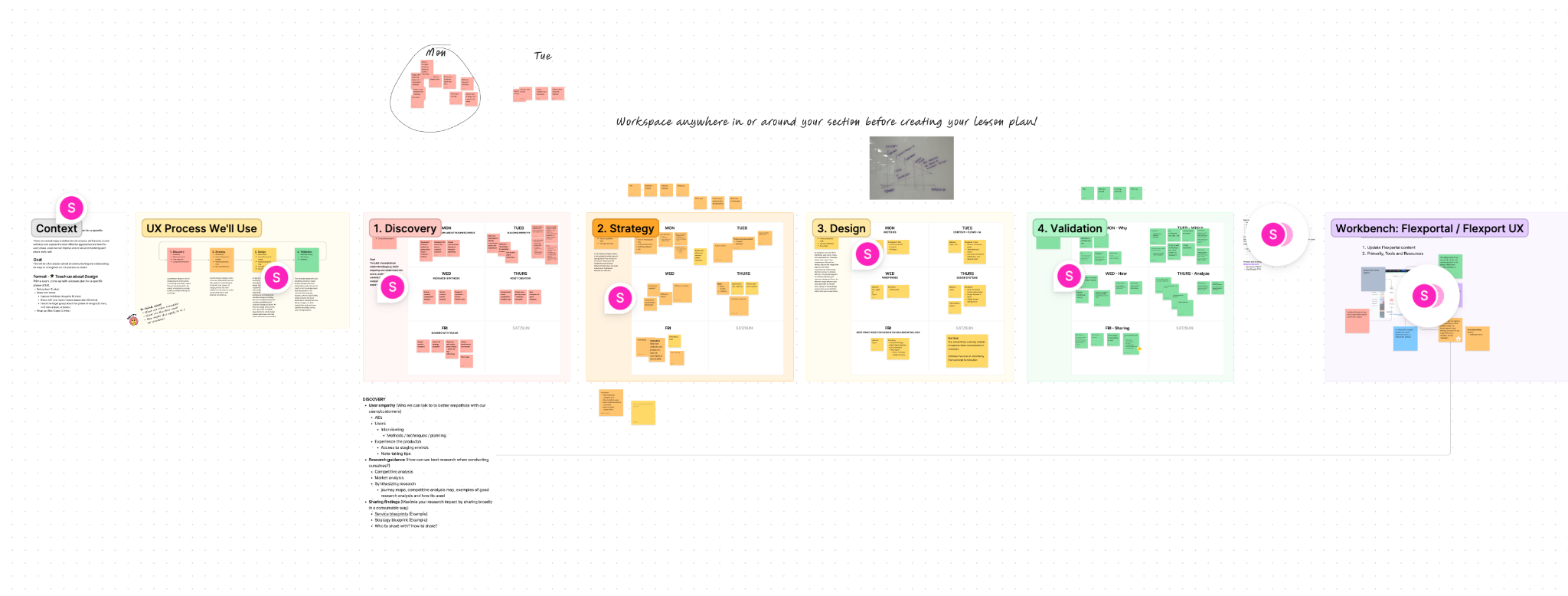
UX lesson plans — structured process education across the design team
